"Kin See Tuay": The Auspicious Four-Bowl Dessert Tradition and Ancestral Veneration in Ancient Thai Weddings
The "Kin See Tuay - กินสี่ถ้วย" (Eating Four Bowls) tradition is an ancient and profoundly symbolic custom associated with Thai weddings, particularly rooted in the beliefs of the people from the Phra Ruang kingdom before the advent of Buddhism (Phra Ruang refers to legendary kings of Sukhothai). This beautiful practice serves as an unspoken blessing for the bride and groom, wishing them enduring love, prosperity, and a long life together.
In ancient times, the phrase "Let's go eat four bowls" was a universally understood invitation to a wedding.
This rich cultural heritage, believed to be an original marriage custom of the Phra Ruang kingdom, continued to be observed through the reign of King Narai the Great and into the Rattanakosin era. While its ceremonial significance may have lessened over time, evolving into a simple culinary delight, its historical roots remain strong.
Central to the "Kin See Tuay" ceremony is not only the celebratory feast but also a crucial act of ancestral veneration. Before the couple could truly unite, offerings in four platters ("si tieb") were presented to the ancestral spirits of both families. Ancient people believed their homes were protected by house spirits and that their ancestors – grandparents – continuously watched over them, guarding against harm. Therefore, any significant undertaking, especially marriage, necessitated informing these spirits, seeking forgiveness, and making them aware of a new son-in-law or daughter-in-law entering the family. This spirit worship involved offerings like liquor, cigarettes, betel nuts, and boiled chicken, alongside the special "Kin See Tuay" desserts. This act was performed to pay respect, ask for protection, and ensure the new union received the blessings and guidance of those who came before, aiming for the couple to become completely unbreakable union.
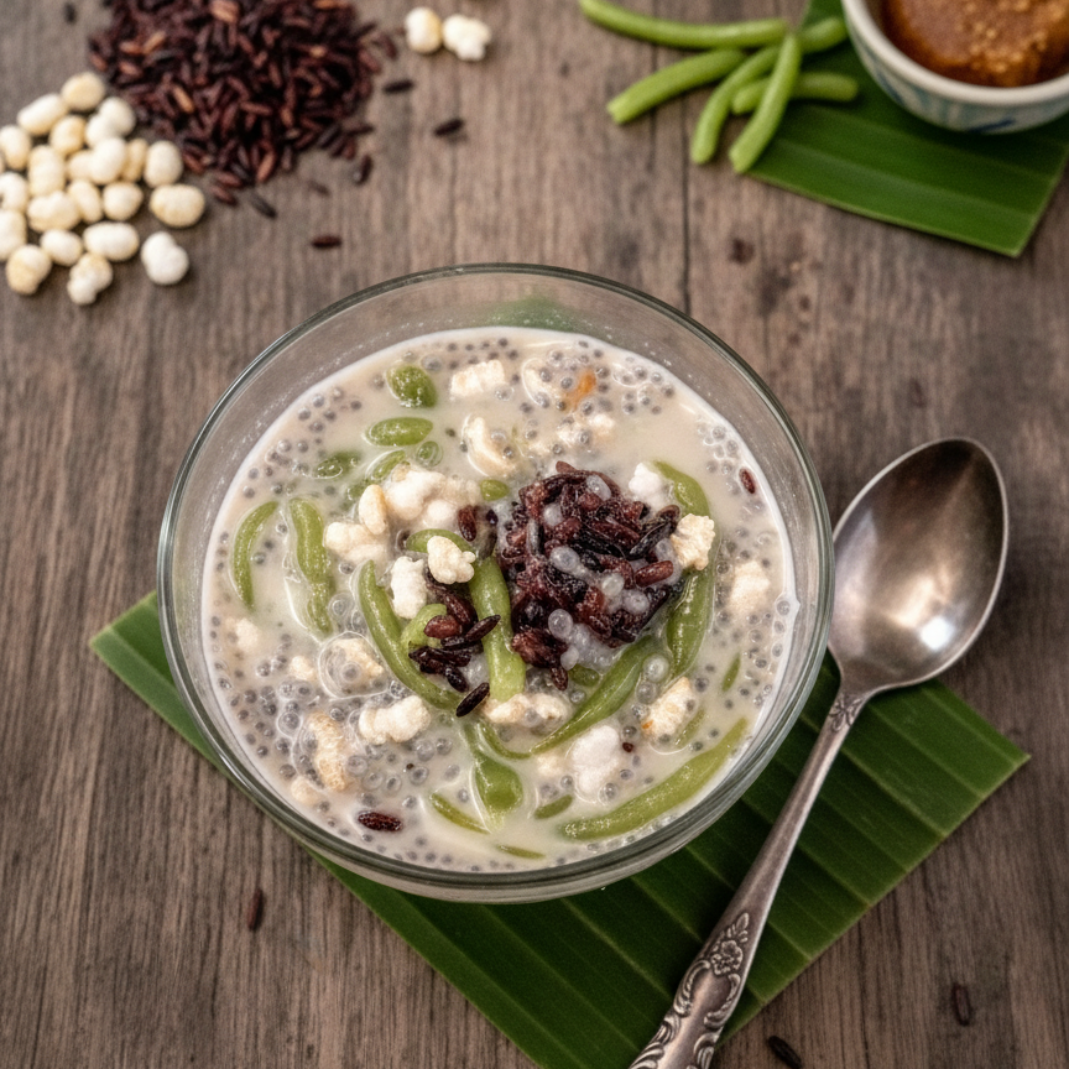
The "Kin See Tuay" dessert itself consists of four distinct bowls, all bound by a crucial ingredient: coconut milk and palm sugar, which is poured generously to enhance their exquisite flavors.
The four auspicious desserts and their hidden meanings, all centered on blessing the couple's love with sweetness and joy, are:
- Kai Kop (Frog Eggs-ไข่กบ): Basil Seeds (or Sago) This dessert symbolizes the blessing of "having a house full of children" The name comes from the observation that frogs lay a multitude of eggs during their breeding season, representing abundant progeny and a flourishing family line for the newlyweds.
- Nok Ploi (Flying Birds - นกปล่อย): Lod Chong (Thai Cendol) "Nok Ploi" signifies longevity and smoothness. The act of the "lod chong" noodles being pressed through a sieve, resembling birds taking flight or gracefully flowing, symbolizes a life for the couple that is continuous, without obstacles, and filled with ease and grace in all their endeavors.
- Nang Loi (Floating Lady- นางลอย) / Mali Loi (Floating Jasmine - มะลิลอย) / Popped Rice This dessert represents blossoming love. Made from khao tok (popped rice), which are beautifully puffed white kernels, it evokes the image of jasmine flowers floating delicately. The floating action of the popped rice in the sweet coconut milk symbolizes a love that is vibrant, flourishing, and beautiful, continually growing and uplifting the couple.
- Ai Tue อ้ายตื้อ ( Being full): Black Sticky Rice "Ai Tue" conveys the blessing of steadfast and enduring love. The name "Ai Tue" (meaning "full" or "dense") refers to the rich, satisfying, and long-lasting fullness provided by black sticky rice. This quality metaphorically represents a love that is firm, unwavering, deeply satisfying, and holds the couple together in a strong, inseparable bond.
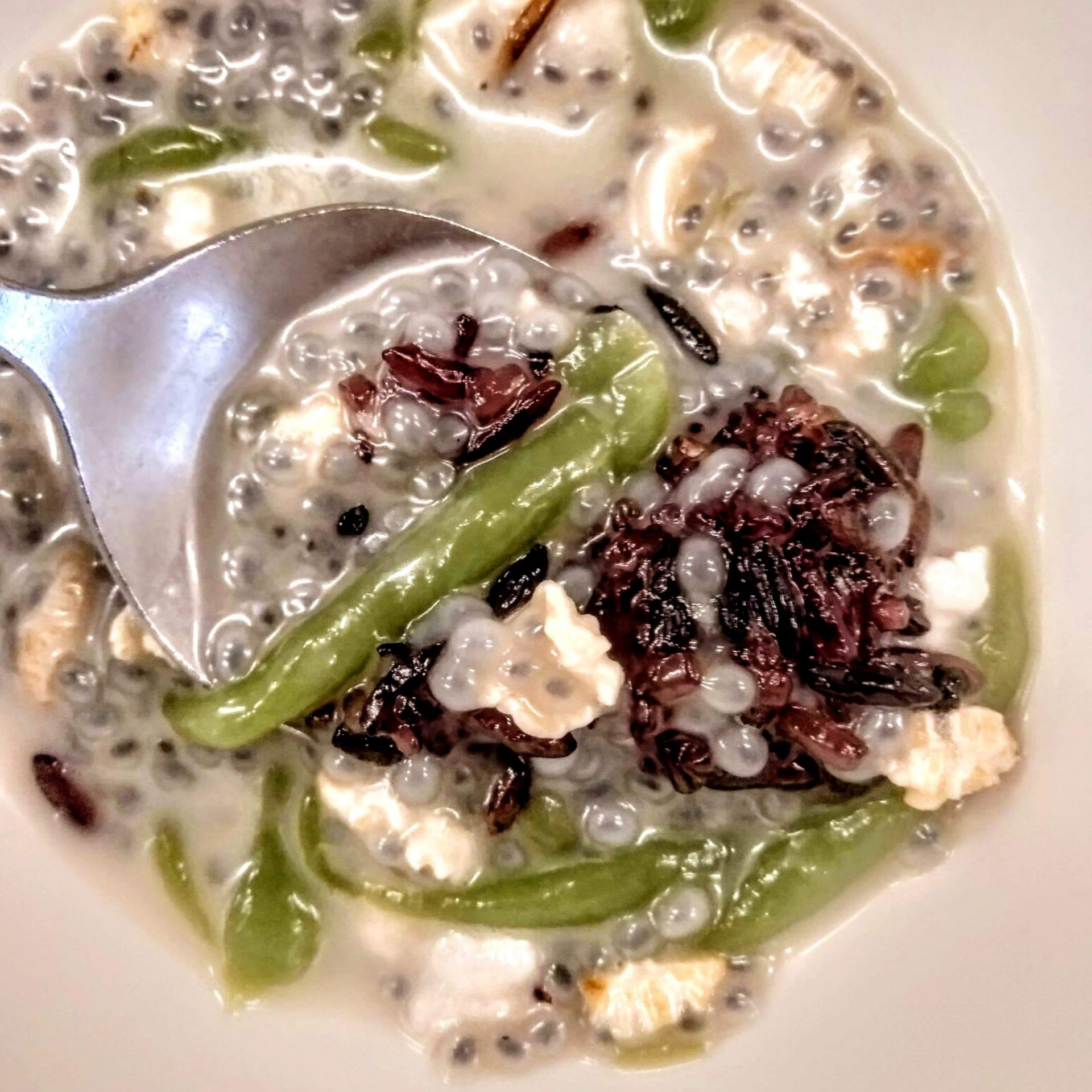
The traditional way to enjoy this delightful treat is wonderfully simple: first, a portion of black sticky rice is placed in a bowl, followed by the "lod chong" and basil seeds. This mixture is then generously drizzled with aromatic coconut milk infused with sweet palm sugar. Finally, a sprinkle of popped rice is added, allowing it to soak up the sweet liquid. A spoonful of this harmonious blend is said to bring immense satisfaction and a true taste of ancient Thai blessings.